
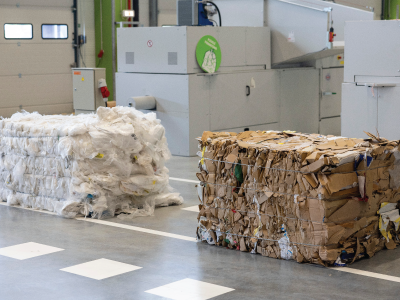
Creating a bale using a baler is a straightforward yet essential process in waste management, allowing businesses to compact recyclable materials efficiently. This method reduces storage requirements, fatigue and labour-related injuries among workers, facilitates transportation, and contributes to environmental sustainability. Here is a step-by-step guide to making a bale effectively.
Step 1: Load the Baler
Start by preparing the material you intend to bale, whether it be cardboard, plastic, textiles, or other recyclable waste. Flatten larger pieces where necessary to ensure they fit efficiently within the chamber of the waste press machine (but don’t overdo it, to prevent injury or bodily strain). Distribute the material evenly to prevent blockages and ensure optimal compression. Avoid overloading the baler, as this may hinder the compression process and reduce the efficiency of the bale formation.
Step 2: Compress the Material
Once the chamber is appropriately filled, activate the baler. Most modern balers are user-friendly and feature simple control panels that are easy to train staff to operate, though they should only be operated by trained staff. The machine will apply significant pressure to the materials, compacting them into a dense and uniform shape. Different types of balers exert different amounts of pressure, so this compression process may take anywhere from a few seconds to a couple of minutes. Some advanced balers, like hydraulic or two-ram balers, offer enhanced pressure for more rigid materials.
Step 3: Secure the Bale
After compression, the bale must be secured to maintain its shape and integrity. This is typically done using wire or strong bale strapping, which must be threaded through the designated slots in the baler. Tie the wires or straps tightly, ensuring they are evenly spaced to prevent the bale from loosening during storage or transport. Some advanced balers come with automatic binding systems, however these still need stocking before baling, so Compact & Bale provides baling wire for sale in bulk.
Step 4: Eject the Bale
Once secured, the bale is ready for ejection. Many balers are equipped with a safe and efficient ejection mechanism, such as a hydraulic release system or an automatic bale ejection feature. Carefully eject the bale onto a pallet or designated storage area to avoid damage. You should also ensure proper lifting equipment, such as a forklift or pallet jack, is available to move the bale safely.
Step 5: Store or Transport the Bale
After ejection, the bale can be stored or transported for recycling or resale. Proper storage is crucial, particularly for materials like paper and cardboard, which must be kept dry to maintain their quality and saleability. Organised storage helps for easy access and efficient waste management.

By following these steps, businesses and organisations can streamline their waste management processes while contributing to a more sustainable environment. Baling reduces waste volume by up to 90%, optimises storage, and minimises disposal costs. Whether using a vertical or horizontal baler, integrating this system into daily operations enhances efficiency and promotes responsible recycling.