
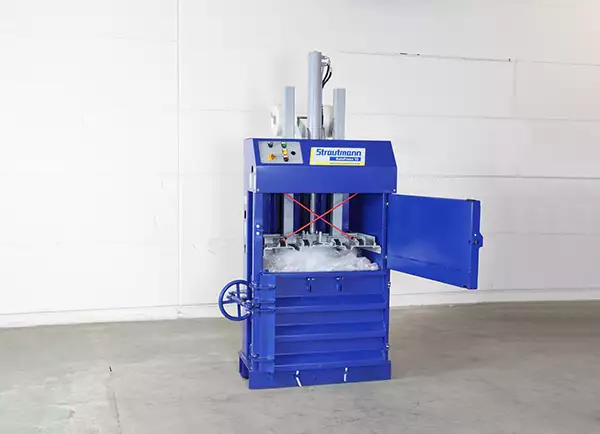
For many businesses, balers have become a crucial investment to get on top of their waste management, reduce disposal costs, and even make a bit of money from recyclable materials. Perhaps you run a retail outlet, warehouse, or distribution centre; a baler can turn bulky, voluminous waste into dense, manageable bales, and, in some cases, profit.
But how much does a baler cost? There isn’t just one answer, or even an average. It depends on a range of factors, including the type of baler, its capacity, if it’s used or new, and how much waste your business produces. Let’s look at this a little closer.

What is a Baler and How Does it Work?
A baler is a machine designed to compress recyclable waste – like cardboard, paper, plastic, and some metals – into bales. Although balers come in a range of sizes, they tend to come in two main formats: vertical and horizontal.
Vertical balers are loaded from the top and squeeze materials using a downward force, or ram, making them ideal for businesses with limited space and relatively smaller amounts of waste. Horizontal balers, to contrast, are better suited to larger operations with high waste output. There are some balers that even run via automation, eliminating most manual intervention.
Aside from tidying up workspaces, balers cut down the number of bins or skips needed, reduce the frequency of waste disposal, and support higher recycling rates all while helping businesses meet sustainability targets.
How Much Do Balers Cost?
For businesses dealing with larger volumes of recyclables, more robust solutions are necessary when it comes to the waste balers for sale. Medium-sized vertical balers, which offer greater capacity and durability, might cost upwards of £5,000. These balers are often used by larger retail stores, warehouses, and manufacturing facilities that need to process significant amounts of waste efficiently.
At the higher end of the spectrum are horizontal balers, which are designed for heavy-duty industrial-scapes. These machines can handle large volumes of material, including cardboard, paper, plastics, and even metals. The cost of horizontal balers can range from upwards of £20,000 and depends heavily on their specifications and features. High-end models might include advanced automation, allowing for continuous operation and reducing the need for manual labour.
Suited for industrial and high-output environments, horizontal balers often include automatic feed systems, conveyors and advanced safety features. These machines tend to start at £20,000, but prices can reach £100,000+ for fully automated, high-capacity balers.
In all cases, the right baler for your business will depend on how much waste you generate, how frequently you need to process it, and the space available on-site. Regarding costs, you can also factor in the money you will ultimately make back from any recyclable materials you bale and sell, and the amount of waste collections you’ll cut down on as a result of baling your waste, which is detailed further below.

Should You Buy, Rent, or Choose a Used Baler?
One way to make baling more cost-effective is by considering used or rented equipment. At Compact & Bale, we offer flexible options based on your operational needs and budget.
Buying a baler would be ideal for businesses with consistent, long-term waste processing needs. Although the upfront cost is higher, ownership gives you total control and long-term savings.
However, renting or leasing might be more appropriate if you want to use a machine for a trial period before committing, or if you’re dealing with a temporary increase in waste output. In this case, hire options come with maintenance and servicing included.
Used balers are an intelligent middle ground for those that want to own but don’t want to spend as much on a brand-new baler. Due to their robust design and long lifespan, second-hand balers offer remarkable value, often costing far less than new models whilst delivering similar performance. We have a wide range of remanufactured recycling machinery for sale that will suit a lot of different environments.
Which Baler is Right for Your Business?
When choosing the right baler, you need to think about more than just budget. Consider:
- Small volumes of waste can be handled by vertical models, although larger volumes may require horizontal systems.
- If you’re just baling cardboard, a simple unit may be sufficient. If you need to bale plastics, metals, or textiles, you may need a higher-spec model.
- Smaller sites benefit from vertical balers, whilst larger facilities can accommodate horizontal units and conveyor systems.
- Automated baler systems reduce manual handling and free up staff but come with a higher upfront cost.
It’s possible that you’re unsure, and if this is the case, the team at Compact & Bale can assess your needs and recommend the most suitable machine.
Can You Make Money from Baled Waste?
You can! One of the most overlooked benefits of investing in a baler is the potential to earn from your waste. Clean, sorted bales of cardboard, paper, and plastic can be sold to recycling companies, which creates a new revenue stream for your business. Let’s look at a rough breakdown:
- With a cardboard waste baler, bales often sell for between £30 and £90 per tonne, depending on their quality and market demand.
- Paper, especially clean white paper, can be sold for around £20 to £70 per tonne.
- Plastic bales vary more dramatically. HDPE (high-density polyethylene), which is used in milk cartons and cleaning product containers, can reach £200 to £400 per tonne when sorted and cleaned.
The more effort you consciously put into the sorting and maintenance of quality recycling materials, the more you will get in return. We also buy recyclable bales, which means you can offset your baler investment even faster, often achieving a return on investment in under a year.

Common Questions About Baler Costs and Usage
How often should a baler be serviced?
If you’re in possession of a baler, routine servicing is usually required annually. That said, machines that are used more may need more frequent maintenance. Servicing will ensure safety and maximise the lifespan.
How much space does a baler need?
A small vertical waste baler can fit into areas as small as a utility room, but a dedicated space, often with access for forklifts or conveyors for large volumes of waste tend to be required regarding the horizontal balers for sale on our website.
Can I get help with choosing a baler?
Of course! Our team at Compact & Bale offer consultations and site audits to match your business with the ideal baling solution. Simply get in touch to get the ball rolling.
Investing in a baler could be the beginning of a new era for your business. From reducing waste volume and disposal costs to creating new revenue streams, the advantages range from the practical to the financial. The right option will help you to manage waste more efficiently, improve site safety, and support your environmental and sustainability goals.
If you’re looking for expert advice, competitive pricing, or a tailored baling solution, we can help you find the machine that suits your business and your budget.