
Trash compactors utilise hydraulic pressure to compress waste materials, drastically reducing their volume. The fundamentals of a trash compactor include a ram, a compaction chamber, and a bin or container for the compacted waste. When the compactor is activated, the ram descends onto the waste in the chamber, pressing it into a smaller, denser mass. This compression process not only conserves space but also reduces the frequency of waste collection, which leads to lower disposal costs.
There are various types of trash compactors available, catering to different needs and spaces. Wheelie bin compactors are typically smaller and more convenient to house, making them ideal for small businesses. These compactors fit onto standard wheelie bins, compressing the rubbish inside to maximise bin space and minimise the need for frequent emptying.
As an example, the MT240 Compactor suits 240 litre wheelie bins and reduces waste by up to 85%. Without compactors, wheelie bins can fill up quickly, and so a compactor will also reduce manual handling and emptying time, maximising the bin’s potential and allowing operatives to get on with their own work.

On the other hand, large portable compactors are designed for more substantial waste management needs. These units can be moved to different locations as needed, providing flexibility for commercial or industrial sites with varying waste production levels. They are robust and capable of handling larger volumes of waste, making them suitable for businesses that generate significant amounts of rubbish.
The Model AS Skip is a portable compactor comes in a range of colours and suits premises with large rubbish output, owing to the container sizes ranging from 6 to 15 m3 , offering high performance with a small footprint and low maintenance.
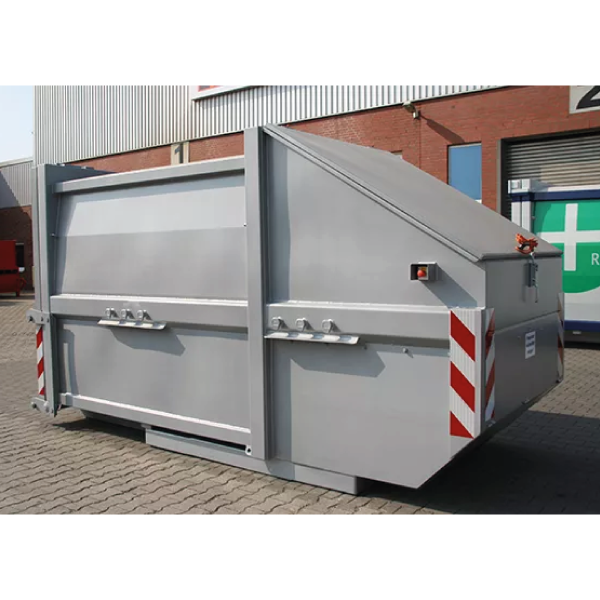
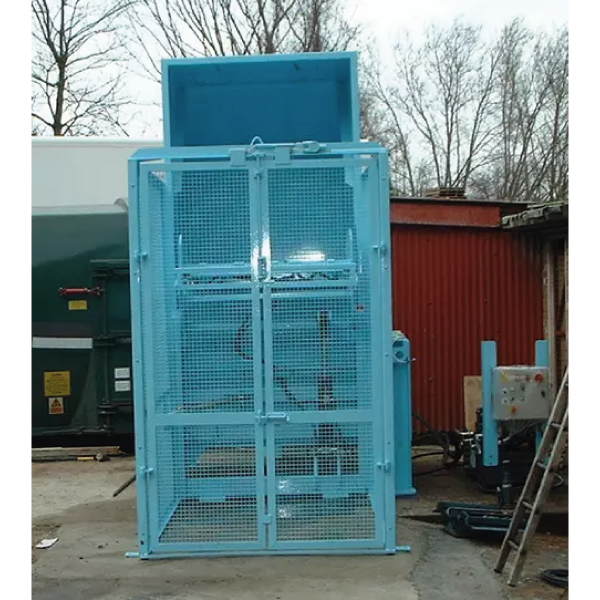
Static compactors, in contrast, are permanently installed units. They are ideal for facilities with consistent and substantial waste output, such as shopping centres, manufacturing plants, and large office buildings. Static compactors are designed for heavy-duty use, offering powerful compaction capabilities that significantly reduce the volume of waste and the associated disposal costs.
For those with a lot of waste output but very little in the way of floor space, the CB1250SS Short Static Compactor can contain it all with a modest footprint. At just over 2m in length, the 25 tonne press force and fast cycle make it ideal for high-pace, enclosed environments.
Overall, a waste compactor machine will play a crucial role in commercial waste management by efficiently reducing waste volume, saving space, and cutting down on waste collection frequency. At Compact & Bale we can even transport and install your compactor, and train your operatives in how to effectively use it.
Whether used in a residential, commercial, or industrial setting, these devices contribute to a more sustainable and cost-effective waste disposal system.